
Do Androids Dream Of Electric Sheep
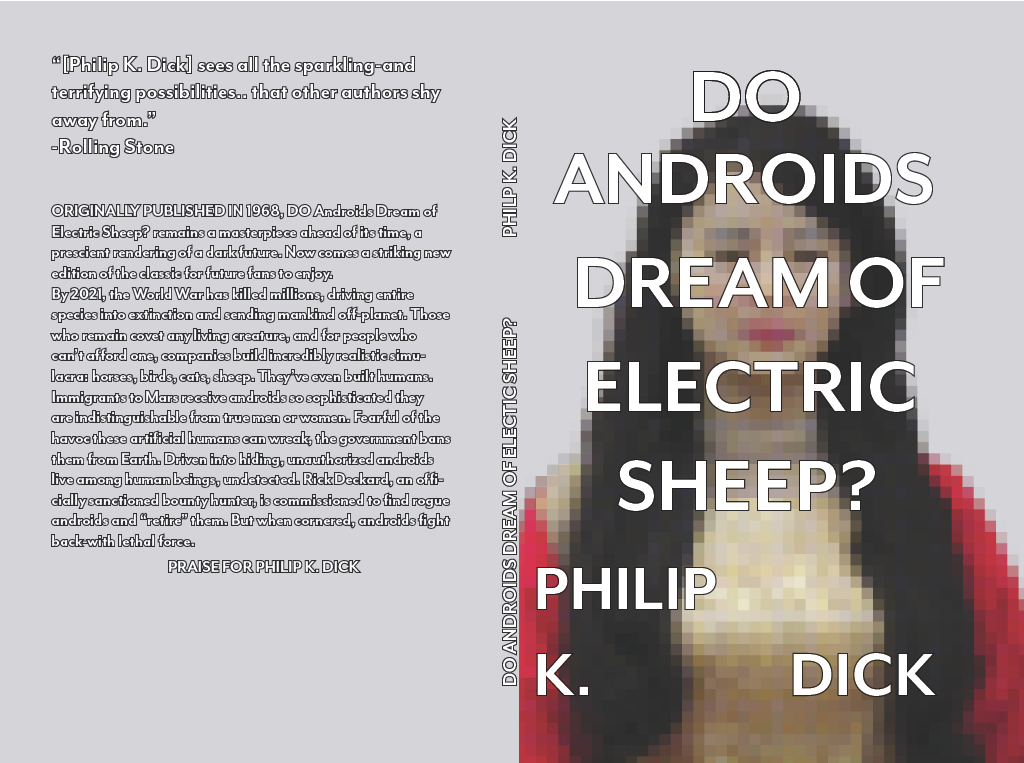
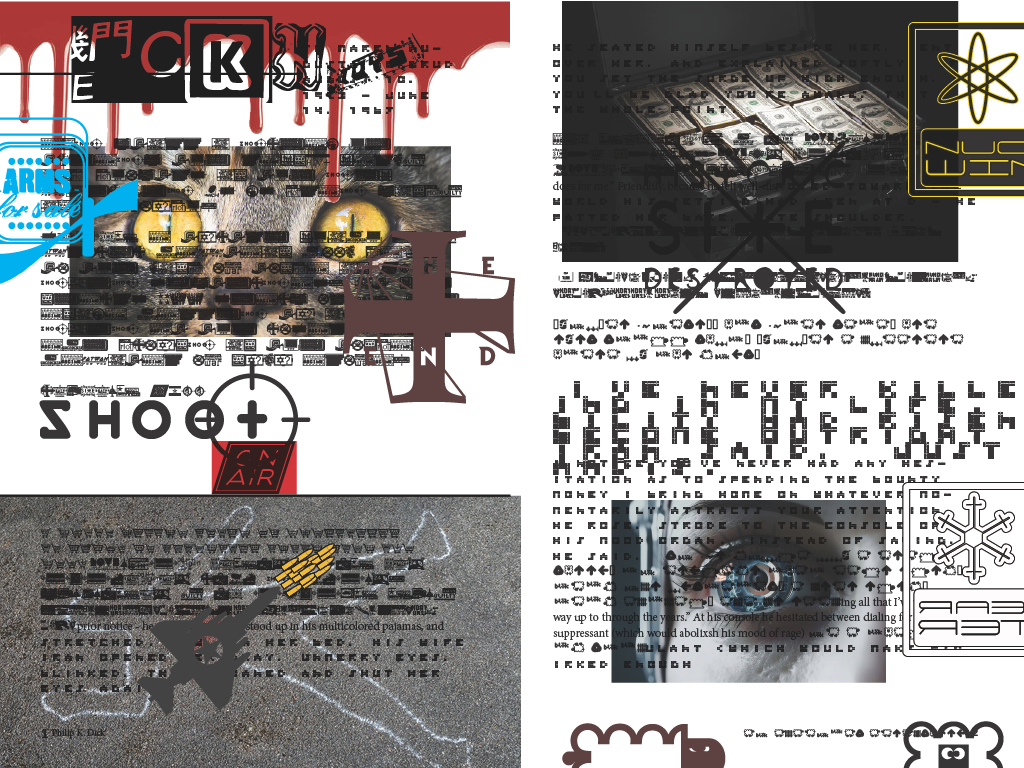
For this project, I chose to distort Philip K. Dick's Do Androids Dream of Electric Sheep? using a simple but powerful conceptual constraint: the command to "spread." My process was methodical yet transformative. I began with the original digital text and, through a series of operations—copying, pasting, combining, and overlaying passages—I forced the novel to replicate against its will, like the androids within its pages.
Each "spread" acted as a generation of replication, introducing errors, glitches, and unexpected juxtapositions. The clean lines of Deckard’s journey blurred with the thoughts of androids, the endless TV sermons of Buster Friendly, and the despair of a dying world. The result is this new book: a palimpsest of the original, where the theme of ersatz reality is no longer just a subject but the very nature of the text itself. This is the book after it has dreamed of itself.
Research and Inspiration
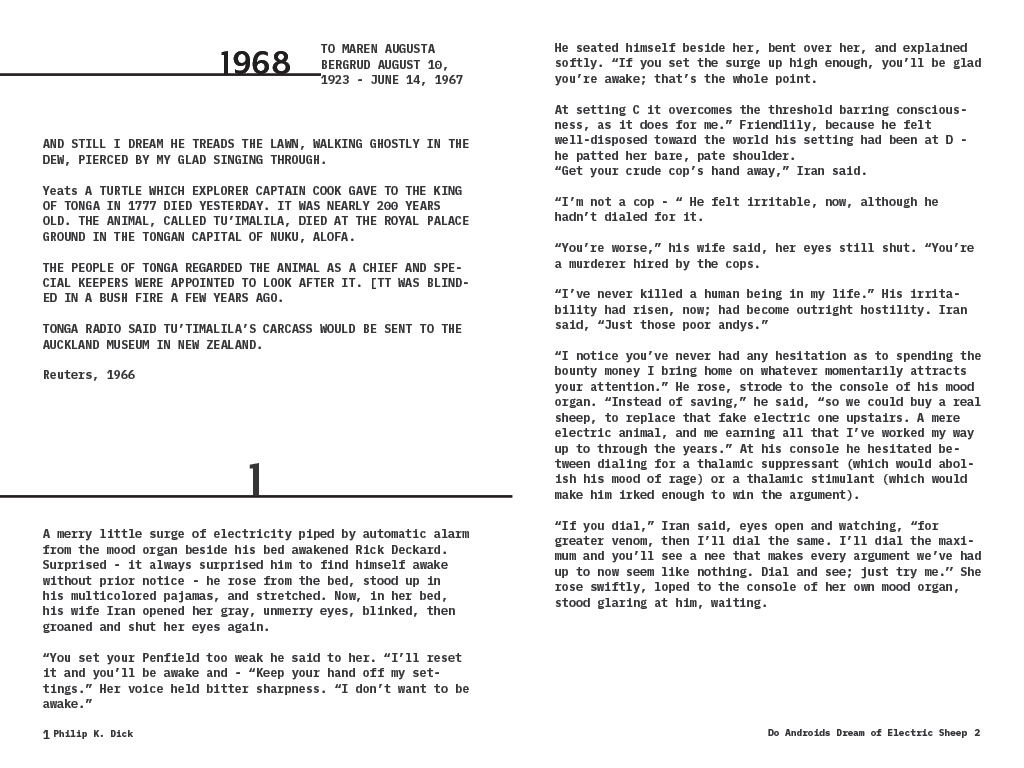
My research for this project began with a close reading of Do Androids Dream of Electric Sheep? to select a single spread that resonated with the book's themes. To visually manifest the novel's anxiety around authenticity and decay, I focused on typography as my primary tool for distortion. I deliberately sought out heavy, shape-based typefaces whose bold forms would actively disrupt the legibility and structure of the page. This typographic distortion was deeply informed by research into the content of the chosen spread itself, ensuring the visual chaos remained conceptually connected to the text's own preoccupations with replication and eroding reality.
My inspiration for this project drew primarily from the core themes of Philip K. Dick's original novel, Do Androids Dream of Electric Sheep?, and the stark, dystopian atmosphere captured in the film Blade Runner 2049. While this was created as a final class assignment, my central goal was to push beyond the basic requirements to create a piece that feels authentically embedded within that universe. I strived to translate the cinematic language of the Blade Runner franchise—its neo-noir aesthetic, its themes of memory and identity, and its rain-soaked, cyberpunk decay—into a unique visual form, aiming for a result that feels like a direct artifact from that world.
Sketching and Conceptualization
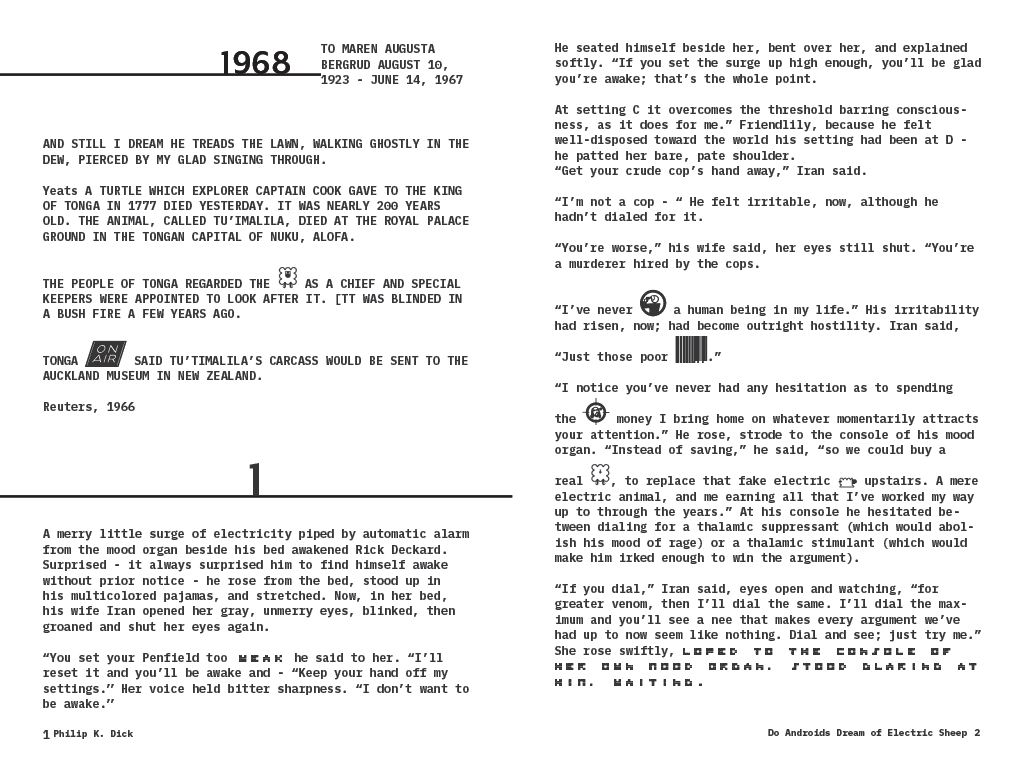
The sketching phase for this project was fundamentally rooted in comprehension. Before any visual experimentation could begin, I dedicated significant time to reading Do Androids Dream of Electric Sheep? and analyzing its core plot and themes. This deep reading was essential to ensure that the eventual distortions would be conceptually meaningful, acting as a visual metaphor for the novel's exploration of reality versus simulation, empathy, and entropy. My initial sketches were less about literal imagery and more about diagramming these core ideas, mapping out how a visual deterioration of text could mirror the moral and societal decay within the story.
This process was highly iterative and developed through continuous dialogue. I engaged in a significant back-and-forth with my peers and professors, presenting my conceptual sketches and early visual tests to gather feedback. These critiques were invaluable in guiding me toward the most effective approach, helping me refine the connection between the book's substance and my aesthetic execution. This collaborative guidance was crucial for steering the project away from mere visual noise and toward a deliberate, thoughtful distortion that resonates with the source material's deepest concerns.
Digital Execution
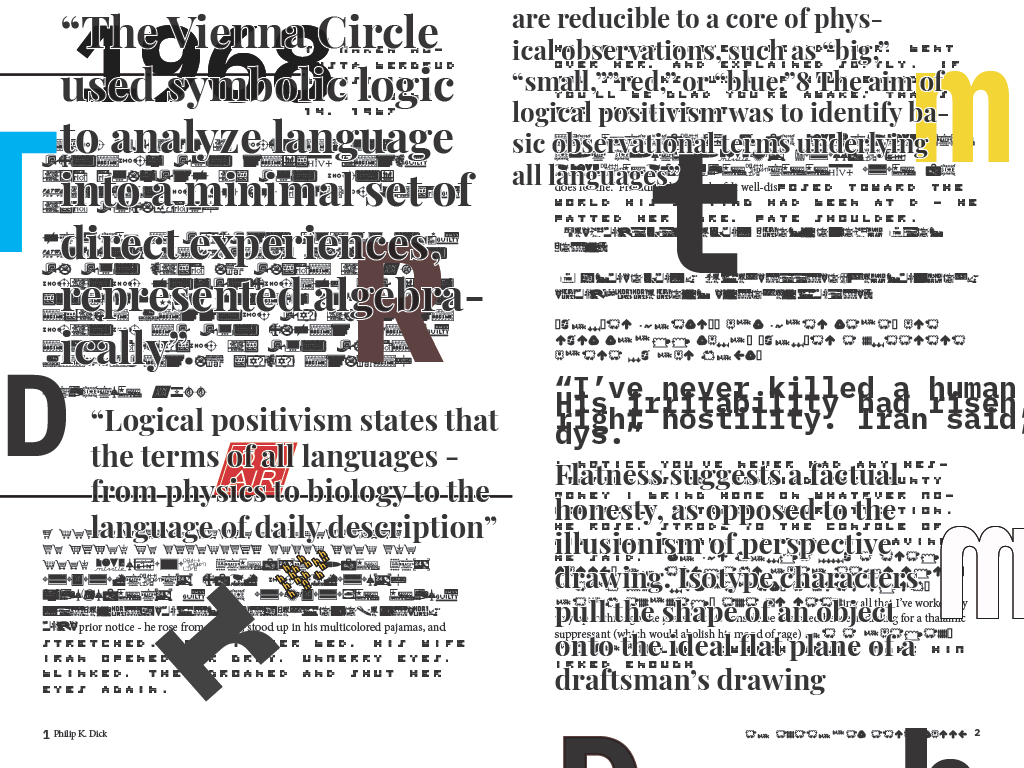
The digital execution of this project was primarily handled through Adobe InDesign, which was the ideal environment for its type-heavy nature. InDesign provided the precise typographic controls necessary to manipulate the letterforms, leading, and kerning to create the intended distortions across the bulk of the book's spreads. To complement this and achieve more intense, texture-based effects, I utilized Adobe Photoshop for the final pages and the cover designs. This hybrid approach allowed me to leverage the structural strength of InDesign for composition while employing Photoshop's powerful raster tools to create the evocative, high-impact visuals that define the book's climactic moments and its overall aesthetic.
Review and Refinement
The phase of review and refinement was a critically collaborative process, heavily driven by feedback from my peers. Their outside perspectives were invaluable in helping me assess the clarity of my concept and the impact of the visual distortions, consistently guiding the project in a stronger direction. This iterative cycle of critique was complemented by rigorous physical testing; I conducted multiple test prints to evaluate how the digital designs translated onto paper. This hands-on approach was essential for troubleshooting issues with ink saturation, texture, and overall legibility, ensuring the final object possessed the intended tactile and visual quality.