
Fullmetal Process

Welcome to Fullmental—your ultimate guide to the rich heritage and hidden gems of the world’s most intriguing car brands! In this first volume, we dive deep into Infiniti, the luxury division of Nissan known for its sleek designs, innovative engineering, and understated elegance. From its origins in the late '80s as Japan’s answer to European luxury to its cutting-edge performance technologies today, we’ll explore Infiniti’s fascinating journey while sharing expert tips and tricks to help you get the most out of these refined machines. Whether you’re a longtime enthusiast or a curious newcomer, Fullmental is here to fuel your passion for automotive excellence.
Research and Inspiration
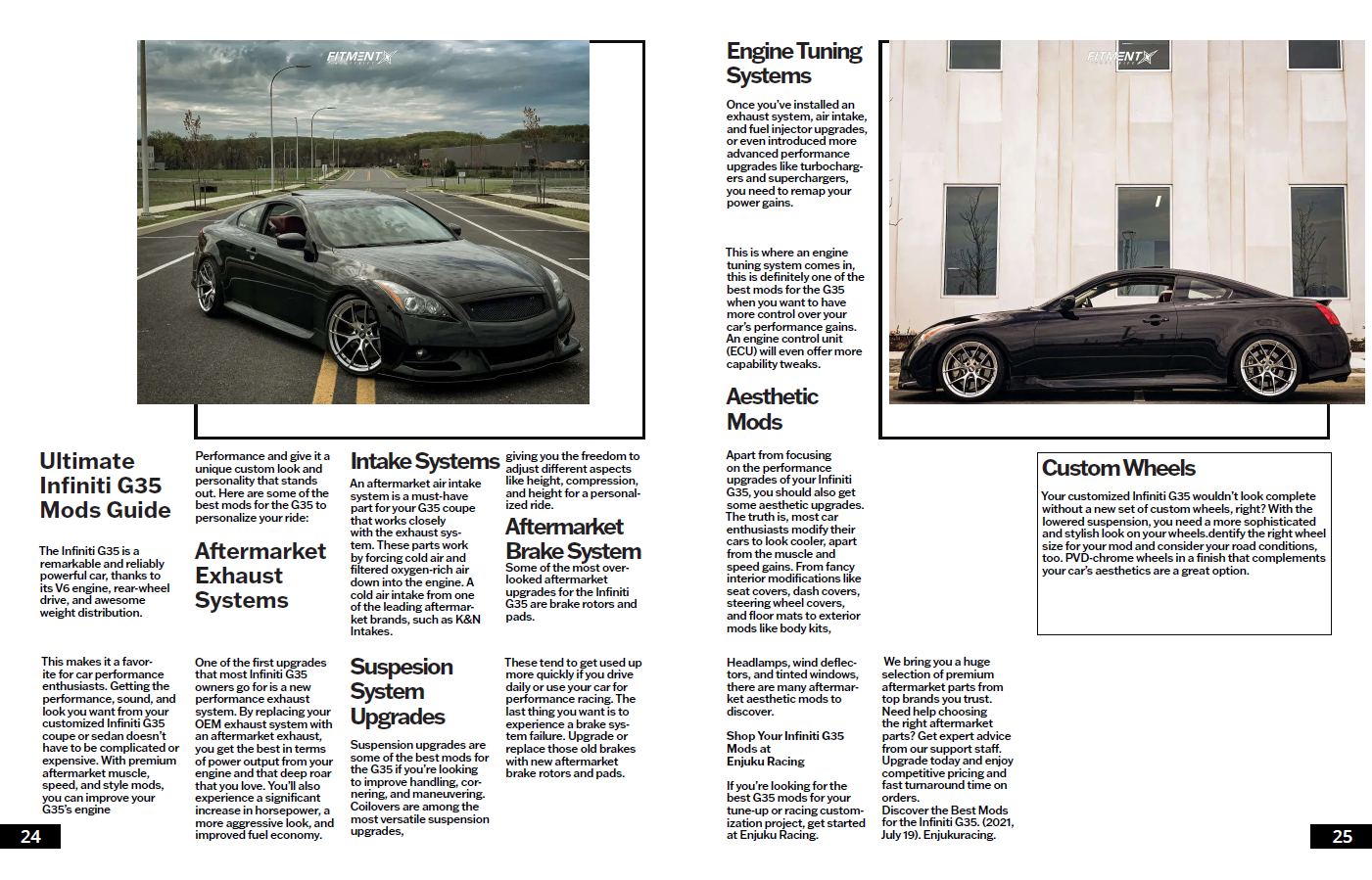
The inspiration behind Fullmental stems from my own journey as an Infiniti owner, filled with both passion and frustration. When I faced recurring issues with my car, I scoured the internet for solutions—only to find scattered, unreliable, or overly technical advice that didn’t always help. That’s when I realized there was a need for a dedicated resource that combined practical troubleshooting with a deeper appreciation for the brand. I wanted to create something that not only solved problems but also connected owners to Infiniti’s heritage, making the ownership experience smoother and more rewarding.
Beyond just fixes, I wanted Fullmental to showcase Infiniti’s unique identity—how it emerged in 1989 as Nissan’s bold answer to European luxury, blending Japanese craftsmanship with performance innovation. Too often, the brand’s story gets overlooked, and I wanted to change that. This magazine is my way of giving back to the Infiniti community, offering clear, trustworthy guidance while honoring the engineering and vision behind these cars. Whether you’re troubleshooting an issue or just curious about the brand’s legacy, Fullmental is here to inform, inspire, and celebrate the world of Infiniti.
The research behind Fullmental involved diving deep into Infiniti’s origins, from interviews with the brand’s founders and executives to articles, reviews, and historical archives. I studied how Infiniti evolved from Nissan’s ambitious vision into a luxury contender, analyzing its design philosophy, engineering milestones, and the challenges it faced along the way. Video retrospectives and rare interviews provided insight into the brand’s identity, while owner forums and technical bulletins revealed common pain points—like the notorious VTC (Valve Timing Control) Solenoid—that often left drivers stranded without clear solutions. Beyond official sources, I contributed my own hands-on experience, especially with problems like the VTC Solenoid failure, which could cripple an Infiniti’s performance yet had almost no accessible repair guides. Through trial, error, and collaboration with mechanics, I documented fixes that weren’t found in manuals or online forums. This blend of historical research and real-world problem-solving became the foundation of Fullmental—a resource that doesn’t just recount Infiniti’s past but equips owners with the knowledge to keep their cars running smoothly today.
Sketching and Conceptualization
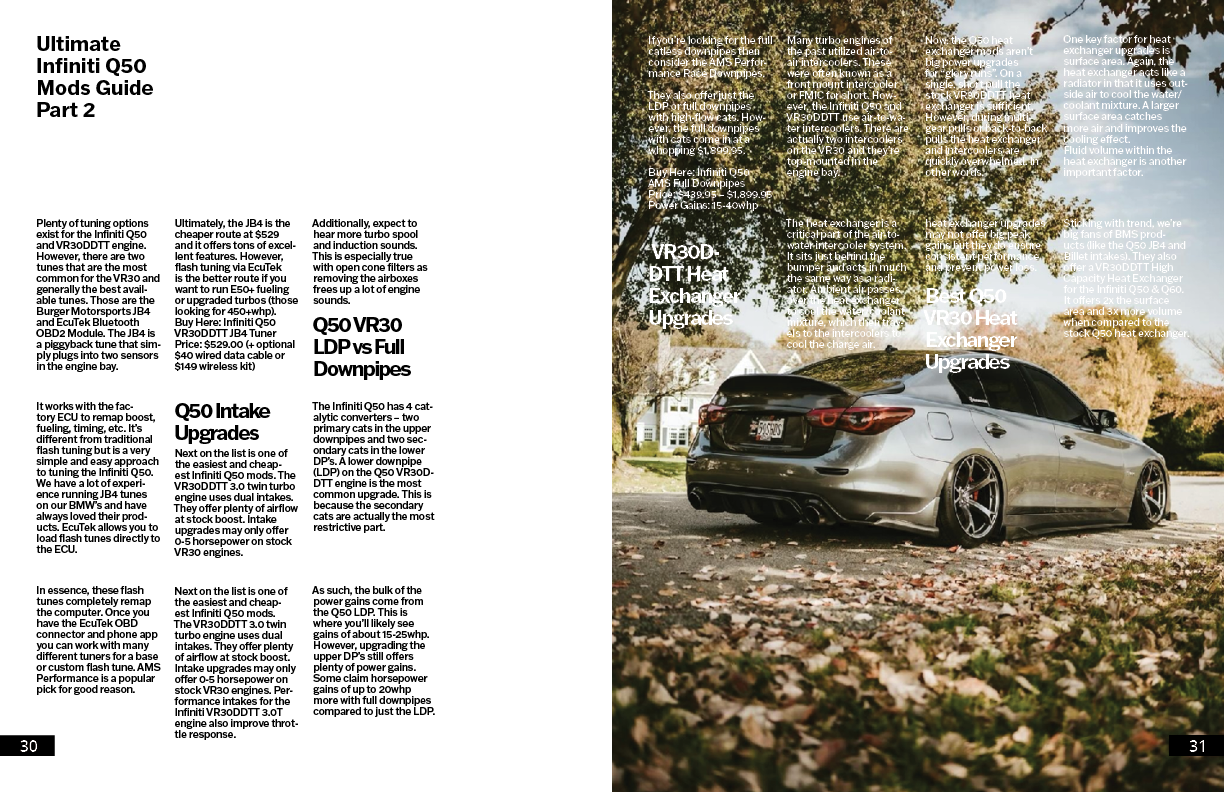
The sketching and conceptualization phase of Fullmental was where ideas transformed into tangible designs, blending aesthetics with functionality to create a magazine that’s as visually engaging as it is informative. I experimented with bold layouts, dynamic typography, and striking imagery to reflect Infiniti’s sleek, performance-driven identity, ensuring every page captures the brand’s luxury essence while remaining reader-friendly. From rough hand-drawn drafts to digital mock-ups, this process allowed me to refine the magazine’s structure—balancing historical deep dives, step-by-step repair guides, and immersive storytelling into a cohesive, visually compelling experience that resonates with car enthusiasts and Infiniti owners alike.
Digital Execution
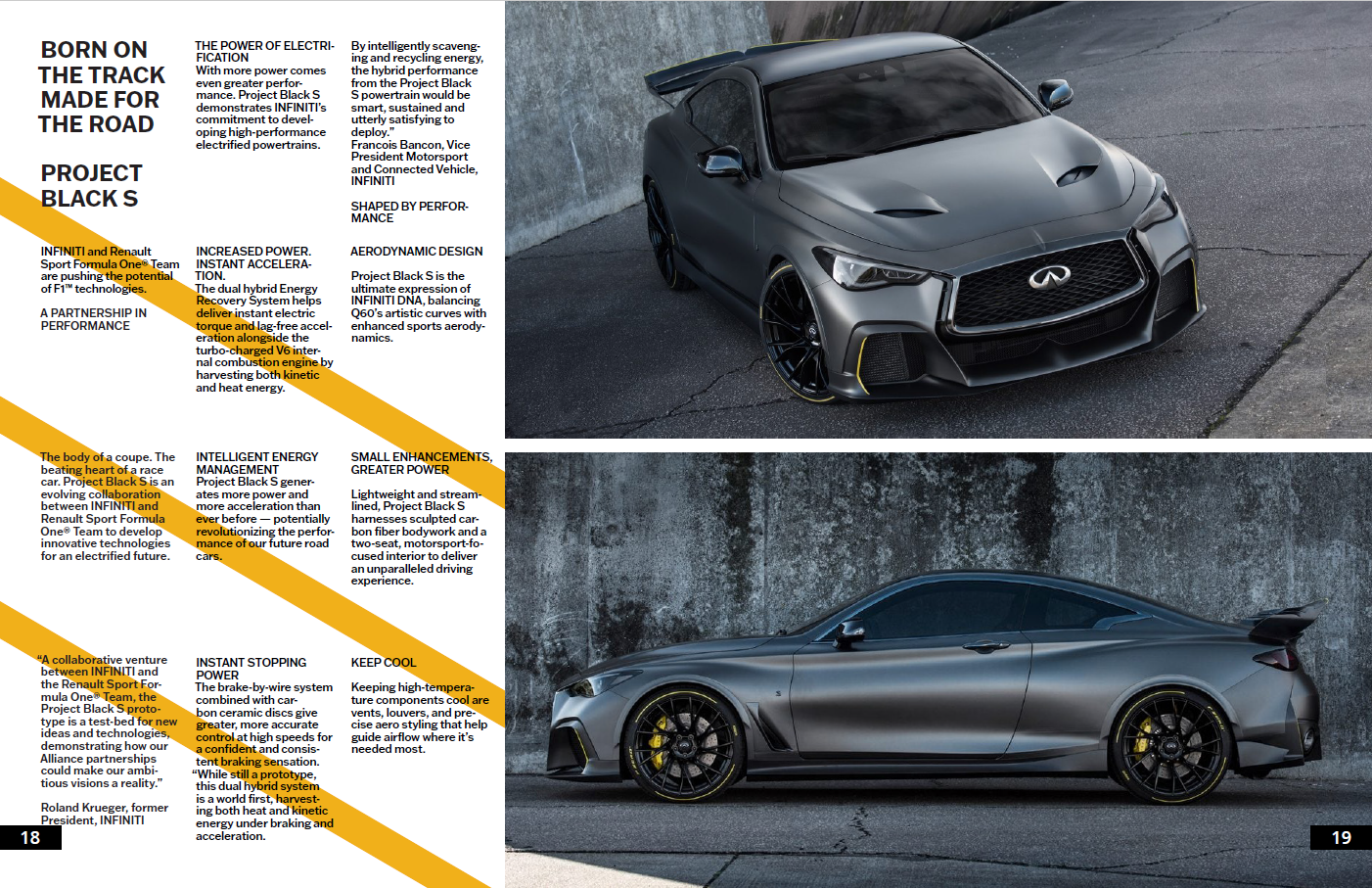
Bringing Fullmental to life required the powerful trio of Adobe InDesign, Photoshop, and Illustrator, working in harmony to transform concepts into a polished, professional magazine. InDesign served as the backbone, where I meticulously structured layouts, ensuring balanced typography and seamless content flow. Photoshop allowed me to enhance high-resolution images of Infiniti models, adjusting lighting and colors to match the brand’s premium aesthetic, while Illustrator was indispensable for creating crisp vector graphics, diagrams, and custom icons that visually explain complex mechanical issues. Every page was crafted with precision, blending striking visuals with clean, reader-friendly text to create an engaging experience that reflects Infiniti’s sophistication.
The digital workflow also enabled flexibility and efficiency—layers in Photoshop made non-destructive editing a breeze, and Illustrator’s scalable vectors ensured graphics remained sharp in both print and digital formats. InDesign’s master pages and style sheets maintained consistency across the entire magazine, from headers to captions, while interactive PDF features like hyperlinks and embedded videos were added for the digital edition. This seamless integration of design tools not only streamlined production but also elevated Fullmental into a high-quality publication, ready to inform and inspire Infiniti enthusiasts with every meticulously crafted page.
Review and Refinement
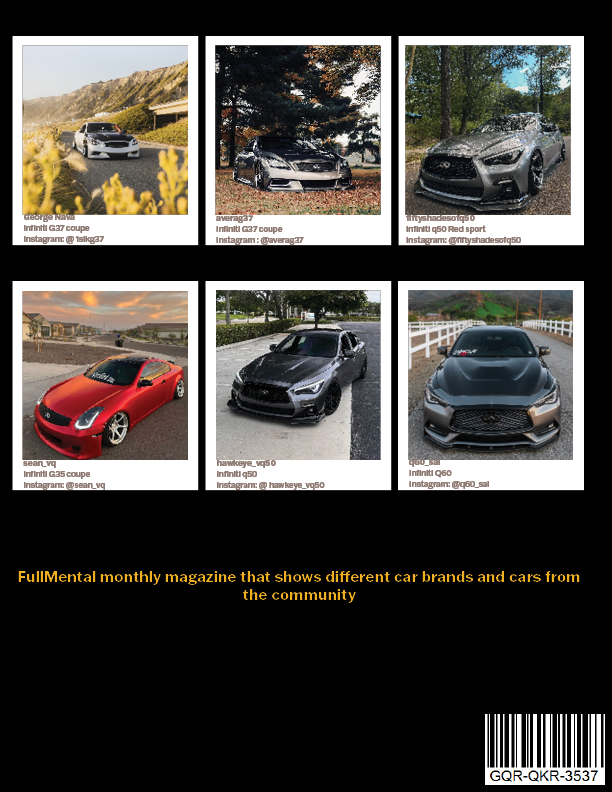
The review and refinement phase of Fullmental was a crucial step in perfecting the magazine, thanks to invaluable feedback from classmates and multiple rounds of test prints. Their fresh perspectives helped identify areas for improvement—whether it was adjusting typography for better readability, reorganizing content flow, or fine-tuning visual balance. Test prints revealed subtle issues that digital previews couldn’t catch, like color inconsistencies or spacing errors, allowing me to make precise adjustments. This iterative process ensured that every spread not only looked polished but also functioned intuitively, creating a seamless experience for readers navigating both the historical features and technical guides.
Each test layout served as a learning opportunity, helping me refine the magazine’s pacing and visual hierarchy. Classmate feedback highlighted the importance of clarity in repair tutorials, prompting me to simplify diagrams and add more step-by-step annotations. I also experimented with different paper stocks and finishes during test prints to find the perfect tactile feel that matched Infiniti’s luxury ethos. By embracing this cycle of feedback and refinement, Fullmental evolved into a cohesive, professional-grade publication—where every detail, from margins to image resolution, was meticulously optimized to meet the high standards of both car enthusiasts and design critics alike.